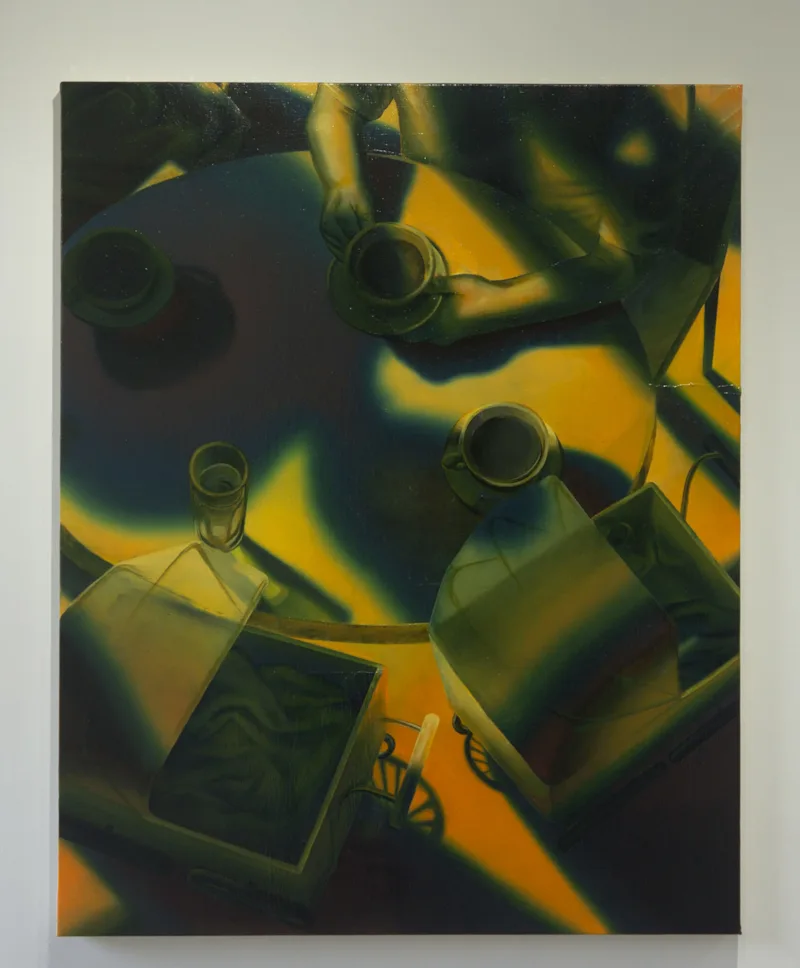
In The Visible and the Invisible, Maurice Merleau-Ponty describes a simple but unsettling experience: when your right hand touches your left, you are simultaneously the one who touches and the one being touched. The boundary between subject and object does not hold. He called this structure chiasme—an intertwining in which the distinction between perceiver and perceived is not abolished but suspended, held open.
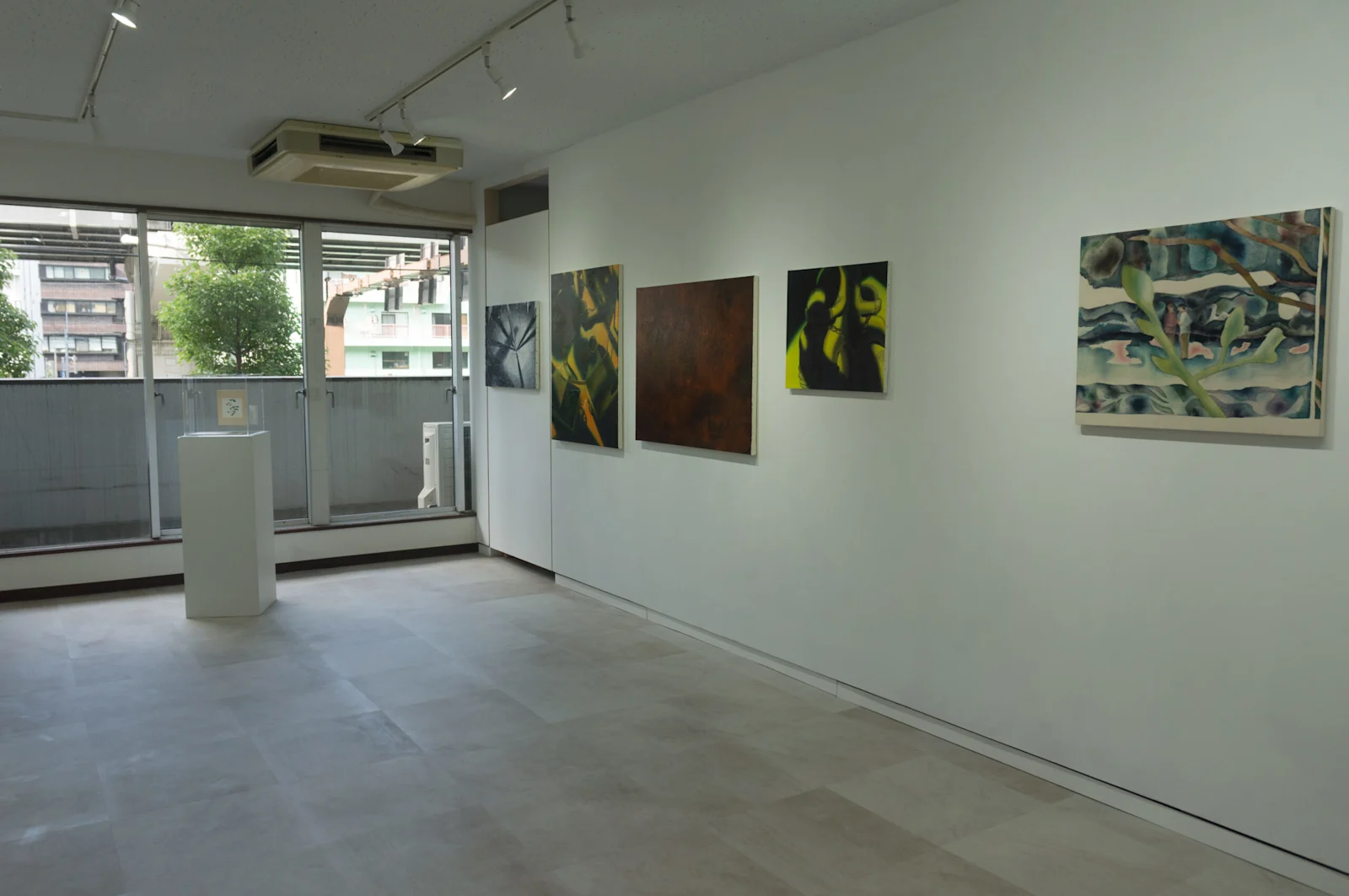
The exhibition places four painters in dialogue—Ishiguro Hikaru, Ishimatsu Yufu, Tazaki Ari, and Matsuda Nayuko—whose practices each enact a version of this structure. None of the works simply present themselves to be seen. Each one folds the act of looking back onto the viewer.
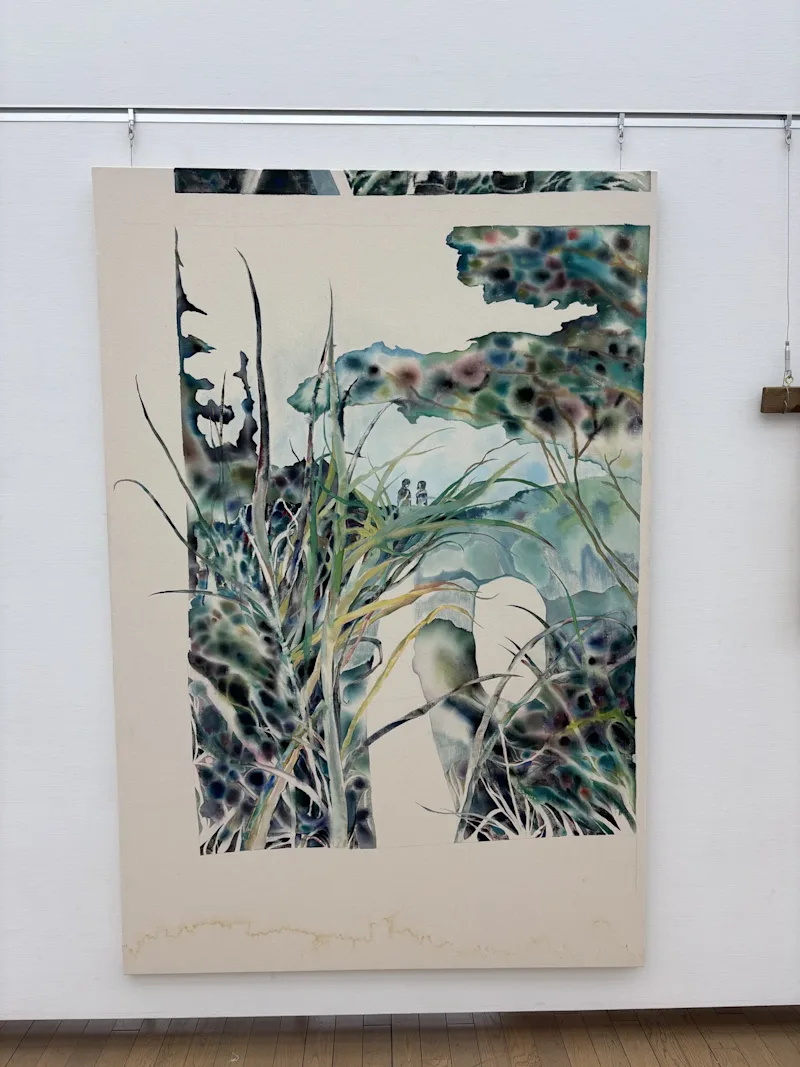
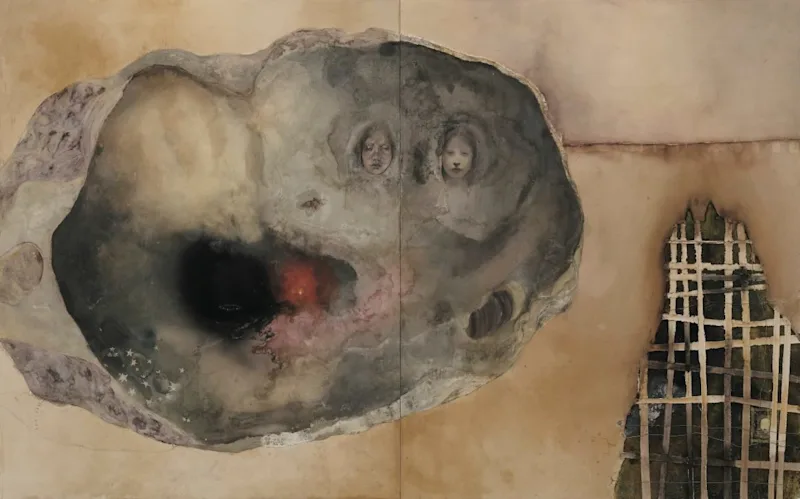
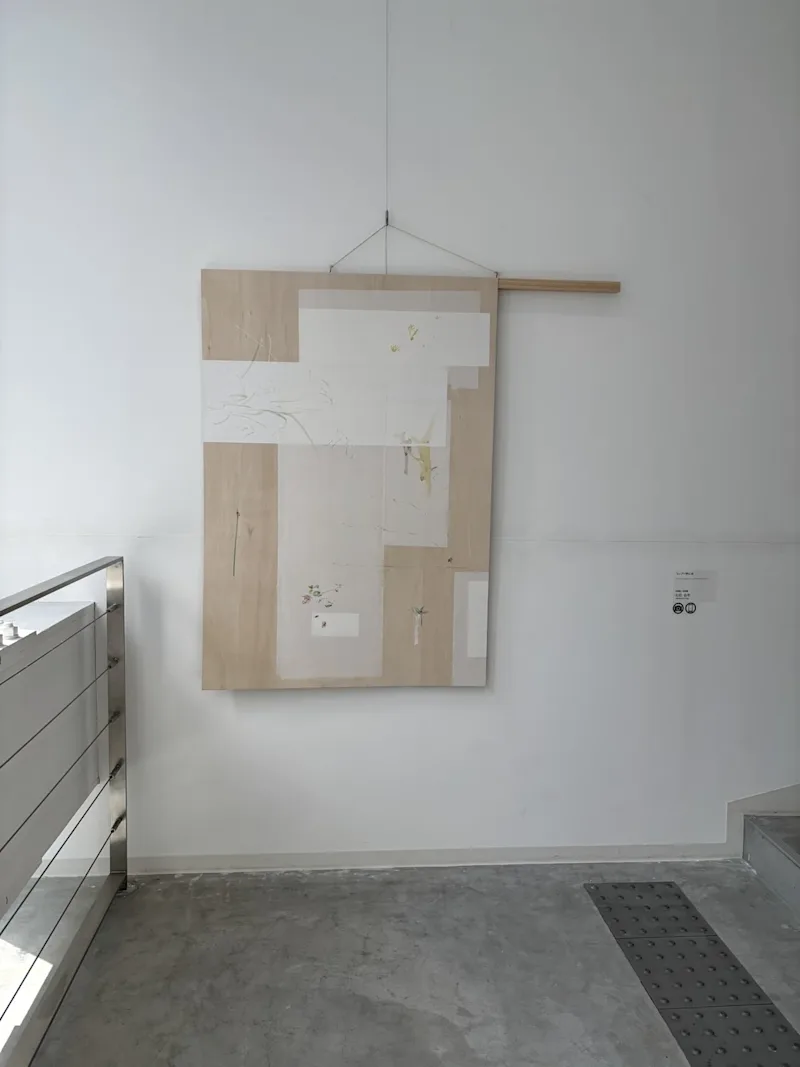
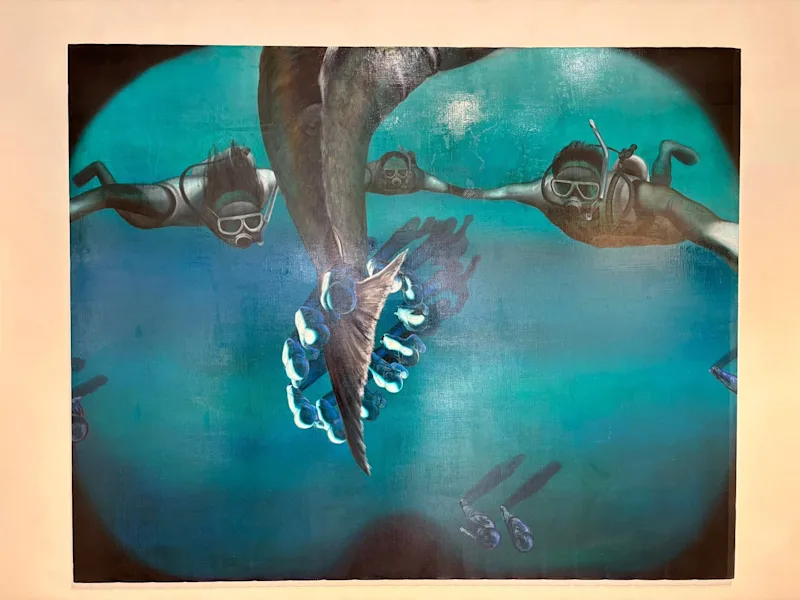
Ishiguro's large-scale paintings accumulate faces, moths, shells, and atmospheric depth into surfaces that return the viewer's gaze without resolving it. Tazaki's Endless Circle implicates the viewer structurally, through a goggle-shaped frame that absorbs the standing body into the composition's chain of relationships. Ishimatsu's work on the staircase landing shifts as the viewer moves through space, making the body's position part of the image. Matsuda's bleeding pigments—acrylic, watercolor, mineral—leave gaps into which the viewer's attention slips.
What these four practices share is not a theme but a structural condition: the viewer cannot remain outside. The works require presence, movement, sustained attention. They do not reward distance.
Merleau-Ponty's chiasme is not a metaphor for empathy or connection. It is a description of how perception actually operates—not as a one-way transmission from world to eye, but as an entanglement in which seeing and being seen are inseparable. These four painters do not illustrate this condition. They construct situations in which it briefly becomes perceptible.