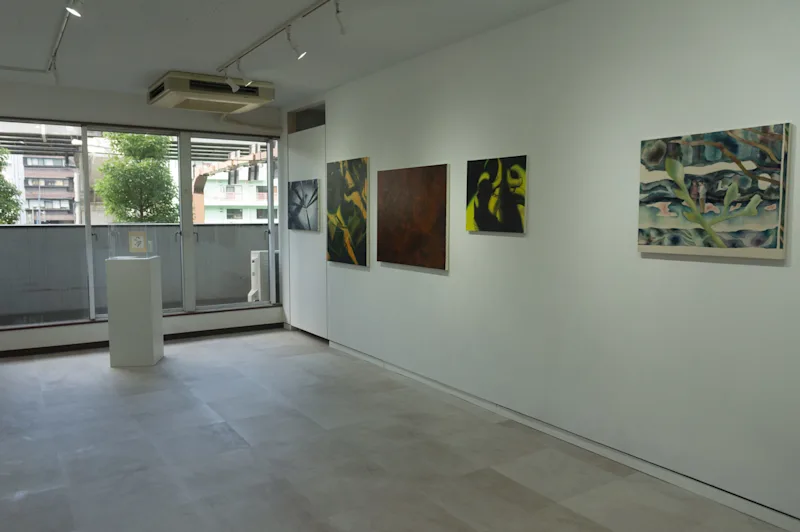
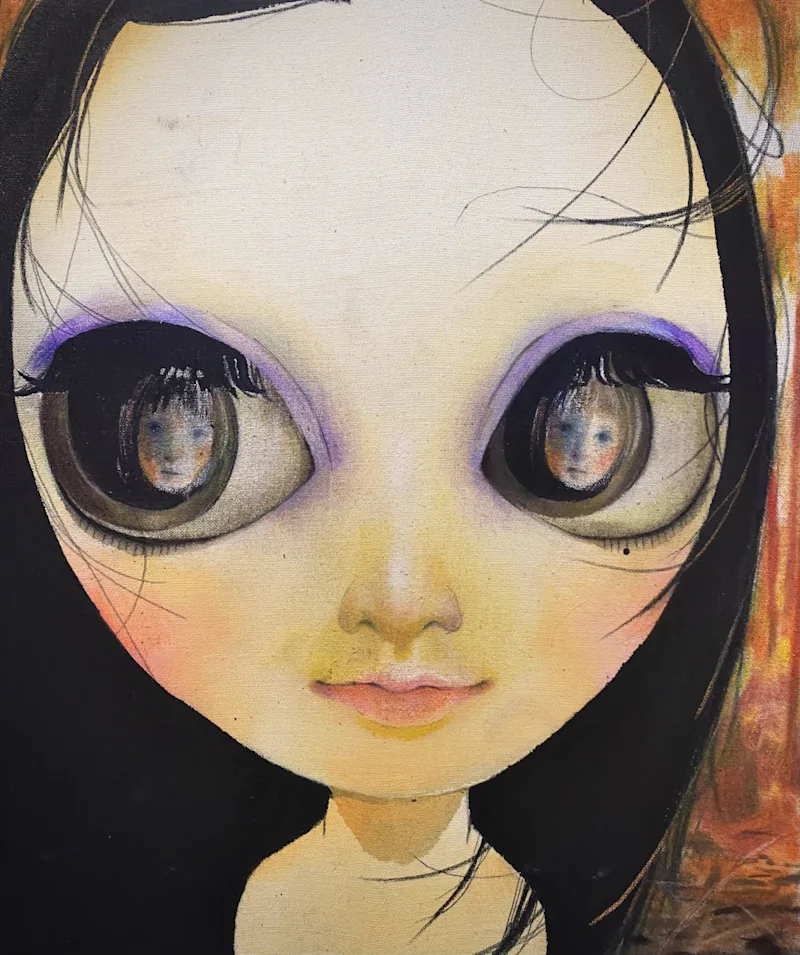
Ishiguro Hikaru's work was installed near the exit of the Tokyo Selection Exhibition at Tohoku University of Art & Design. At 2500 × 4000 mm, the painting does not present itself as an image. It presents itself as a wall.
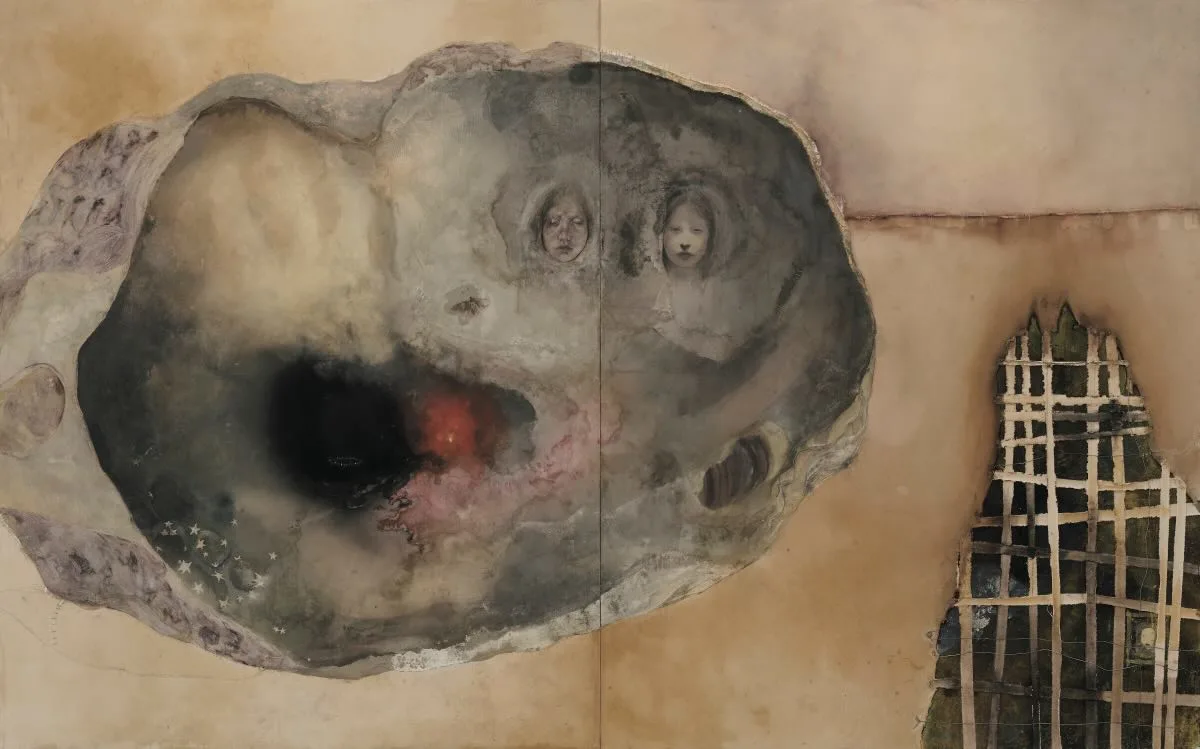
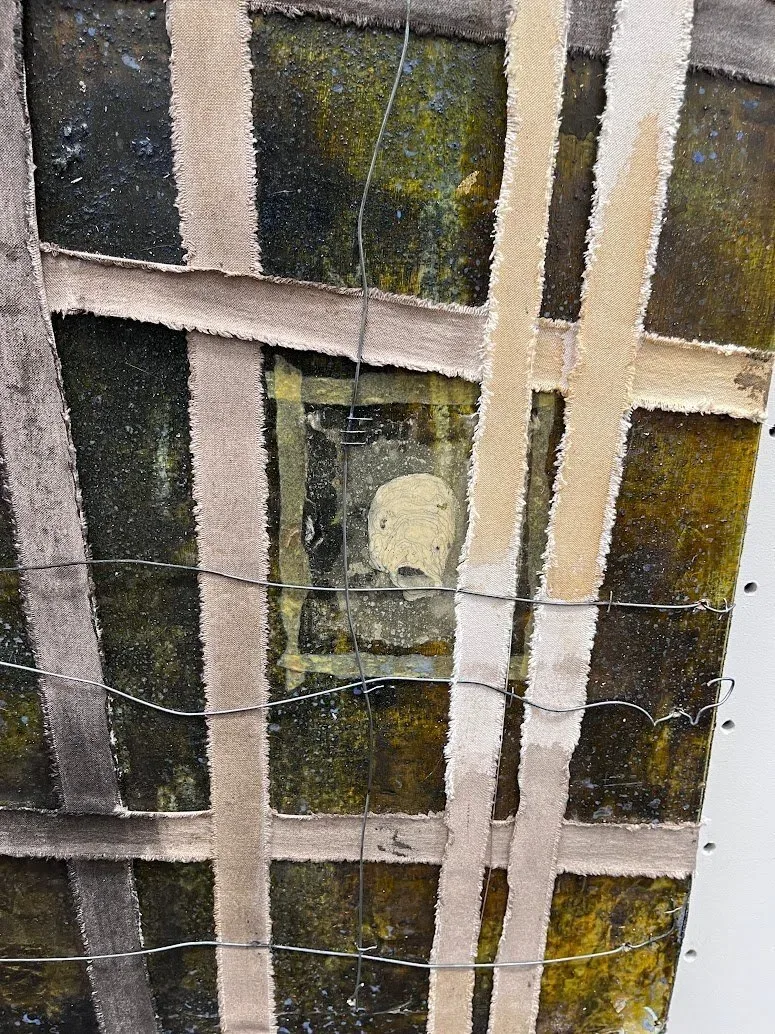
The lattice structure in the lower right corner recalls the bamboo framework—komai—used inside traditional earthen walls. This single detail reorganizes the entire surface. A foreground and background emerge. What had appeared as an undifferentiated field becomes layered: a deteriorated earthen wall on one plane, and within it, or through it, a void of an entirely different order.
In that void, two faces float. One holds open eyes and pale skin; the other, closed eyes and shadow. Near the closed face, a moth. Whether they signify life and death remains deliberately unresolved. They are placed with their own weight, and the moth with its own ambiguity. Behind the lattice structure, a vessel lies on its side. The composition invites the viewer deeper, toward something not fully disclosed.
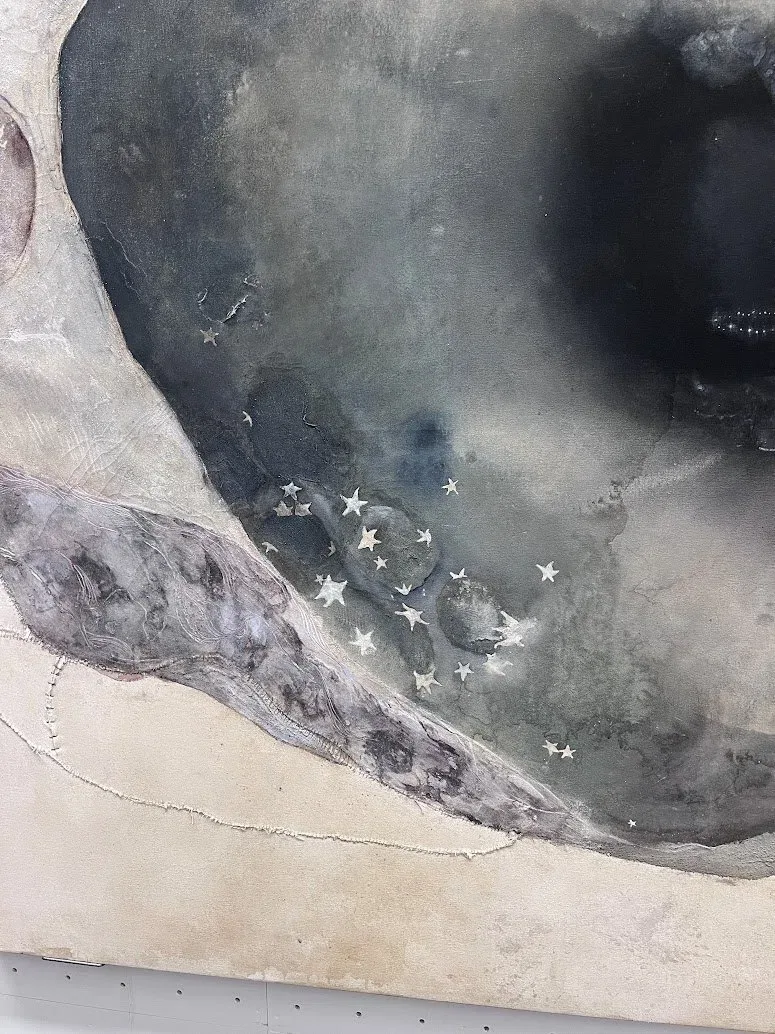
Within the central opening, stars shimmer. Further still, a golden crown is barely visible in the distance. The depth is not spatial but vertiginous—less a recession than an abyss.
The title draws on an archaic Japanese word: utsuse, the classical term for seashells. Objects once inhabited, carried to shore, emptied. The complete phrase—"only I know the secret of the seashells"—positions this knowledge as intimate, private, irreducible to shared interpretation.
The material structure mirrors this density: cotton cloth, mineral pigments, water-based pigments, ink, oil varnish, cement, gold leaf, sewn fabric. The surface is dense with information, yet quiet. It sustains dialogue rather than resolving it.
Viewed from a distance, the composition shifts again. The red eyes visible across the canvas reorganize into the gaze of an enormous beast looking directly outward. The painting contains this reading without committing to it.
What the work ultimately proposes is a question about boundaries. Between one's own interior and the world surrounding it, there may never have been a division in the first place. Ishiguro does not illustrate this proposition. Ishiguro constructs a surface in which it becomes, briefly, perceptible.