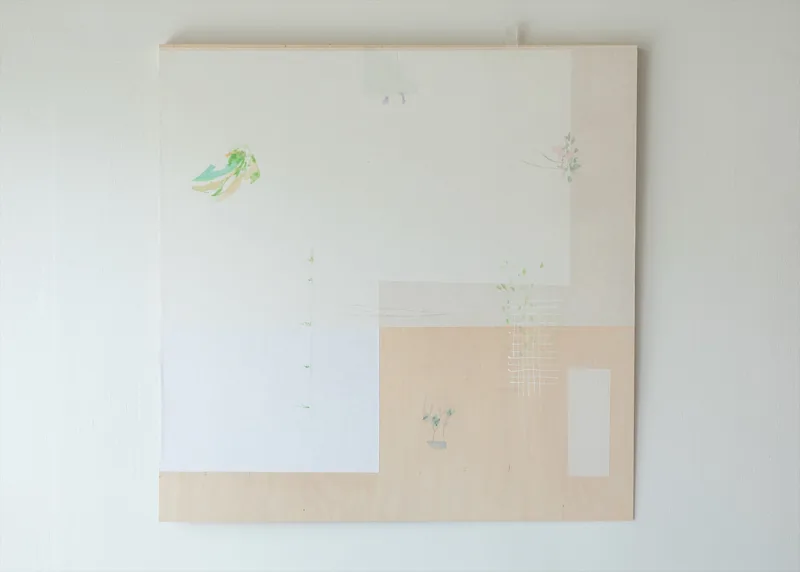
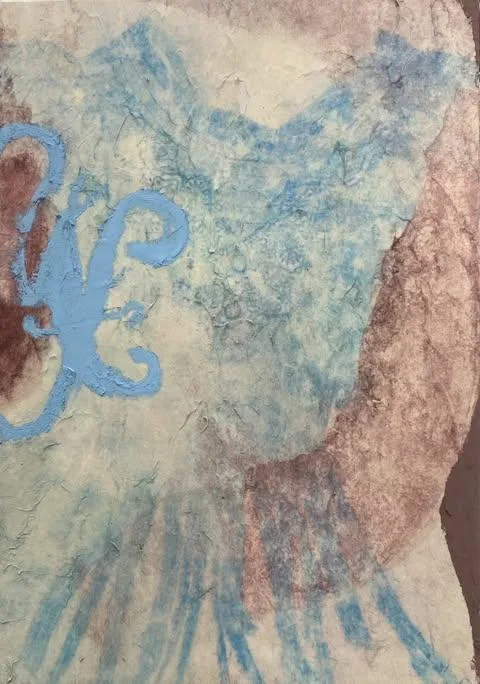
Ishiguro Hikaru’s works transcend from personal experiences to universal themes, offering sharp insights into modern society through deep inner exploration. The themes her works question — existence and absence — overlap with questions many people face today, creating a dialogue with the works.
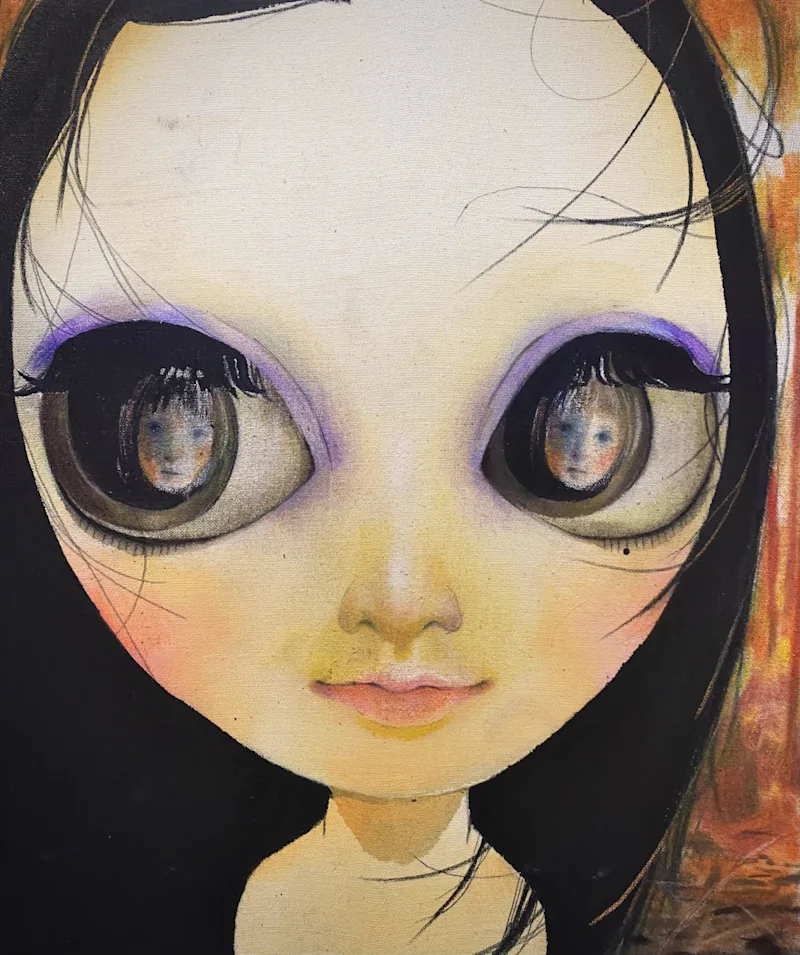
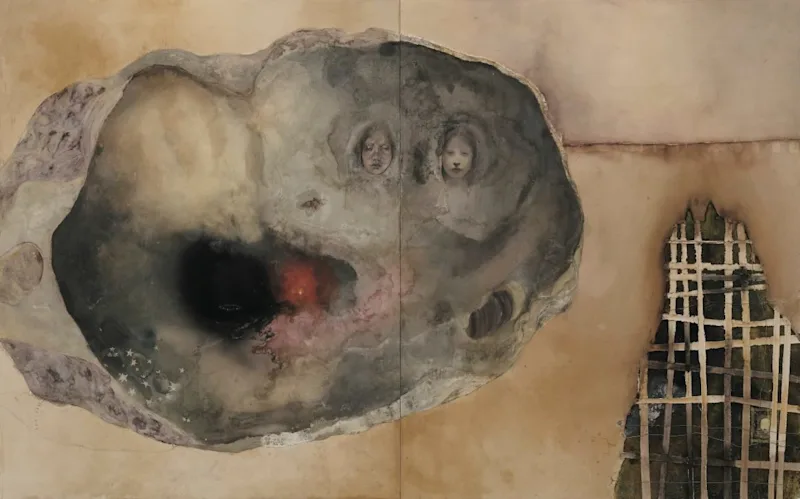
The motifs of butterflies, moths, and seashells that frequently appear in her works symbolize the transience and cycle of life beyond the boundaries of material existence. They function beyond mere visual stimulation, serving as vessels for confronting impermanence, encouraging viewers toward inner exploration. The floating women’s faces that appear in her paintings. The figures depicted as “precious children” leave an impression as beings exploring the boundary between reality and deep consciousness, with expressions that could be interpreted as either girlish or adult. Their timeless appearance suggests both eternity and the existence of hidden stories, leaving room for the viewer’s imagination.
The description of her creative process as Freud’s “work of mourning”[1] gives her works a deep psychological layer. This process, which begins with personal loss, evokes themes of grief and regeneration in the viewer, and emotions overflowing from her inner self trigger empathy and introspection. Beyond the artist’s experience, her works resonate with many people.
Ishiguro Hikaru’s works connect Japanese spirituality and cultural background with contemporary psychological themes, engaging in dialogue with the human interior in today’s complex world.
Reference: [1] Sigmund Freud, Shingu Kazushige (Supervisor), Freud Complete Works Volume 14 1914-15, Iwanami Shoten, 2010