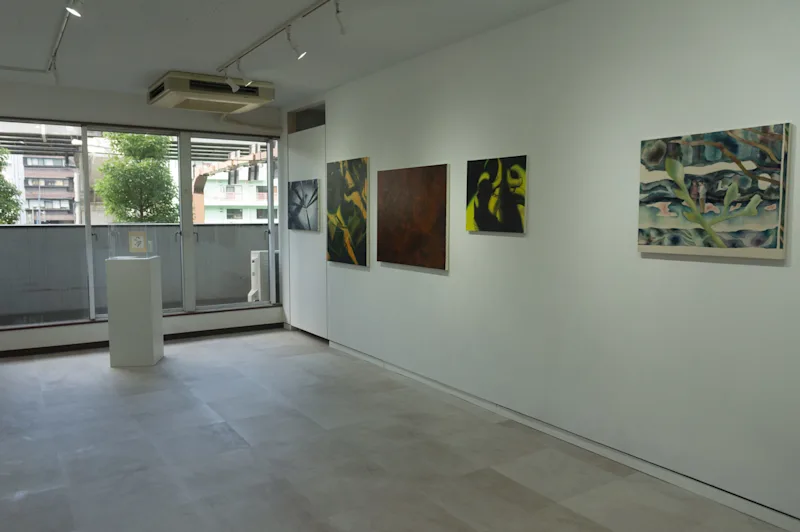
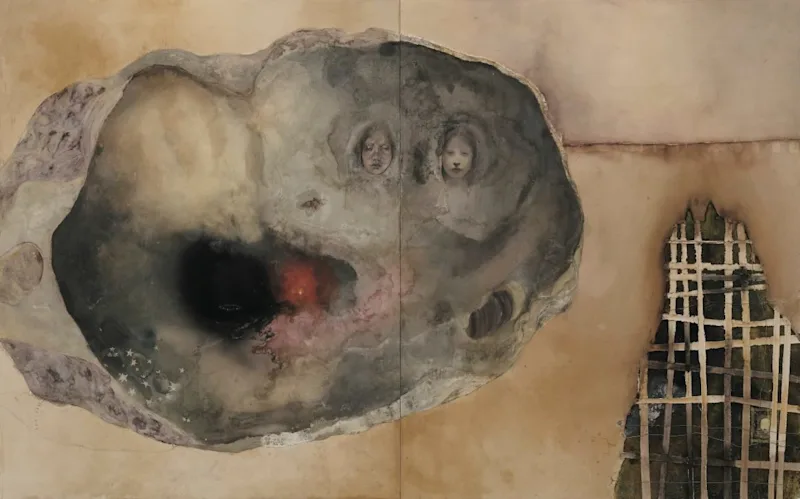
The title is itself a critical position. I Am Probably Not the Right Voice for These Paintings does not apologize for inadequacy—it names a structural condition. These works exist at a distance from language. Words can approach them, but not resolve them. The title makes this explicit before the viewing begins.
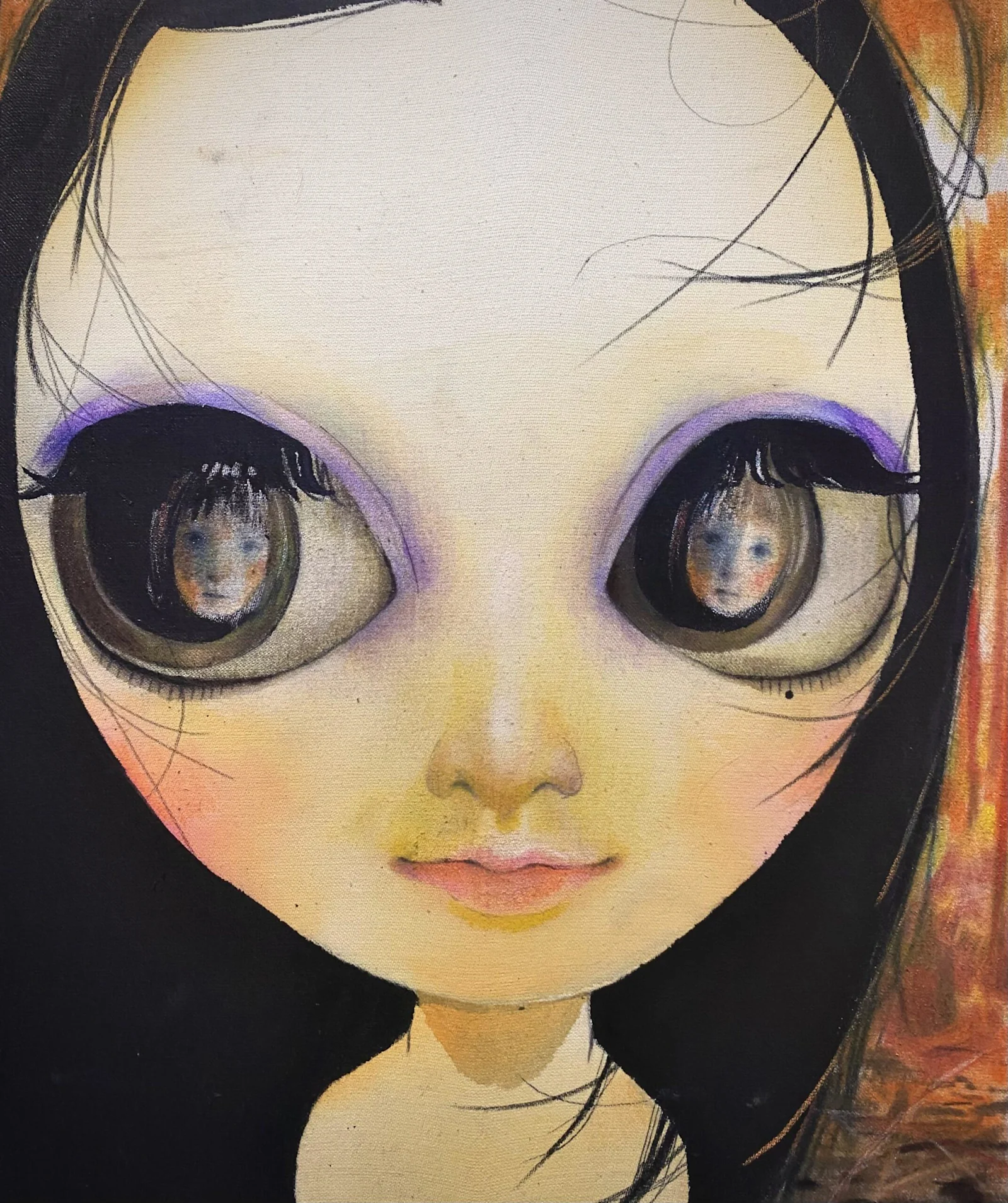
Ishiguro works with cotton cloth, art glue, ink, and water-based mineral pigments—suihi-enogu. The cotton carries its own history before it becomes a support: it has existed in the world, absorbed moisture, responded to light and air. The pigments settle into the fabric in ways that cannot be entirely controlled. Making is not the execution of a predetermined image but an encounter between intention and material agency. What emerges is partly the artist's, partly the matter's.
The works in this exhibition are modest in scale—around 370 × 313 mm. This is not incidental. At that size, the viewer must approach. The relationship becomes close, almost private. There is no position from which the work can be taken in at a glance. It requires time, proximity, sustained attention.
Ishiguro describes this as an "asynchronous relationship"—a temporal structure that does not align with the demand for immediate comprehension. The paintings do not withhold meaning as a strategy of difficulty. They operate according to a different pace. Meaning, where it arrives, arrives slowly.
The exhibition title positions the gallery itself within this logic. The works are not fully available to curation, to description, to the voice that would explain them. What remains after language reaches its limit is what the paintings hold.