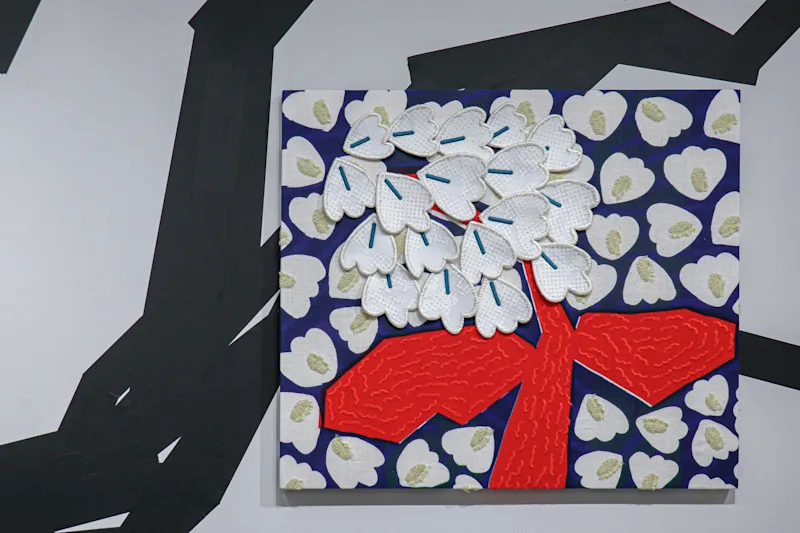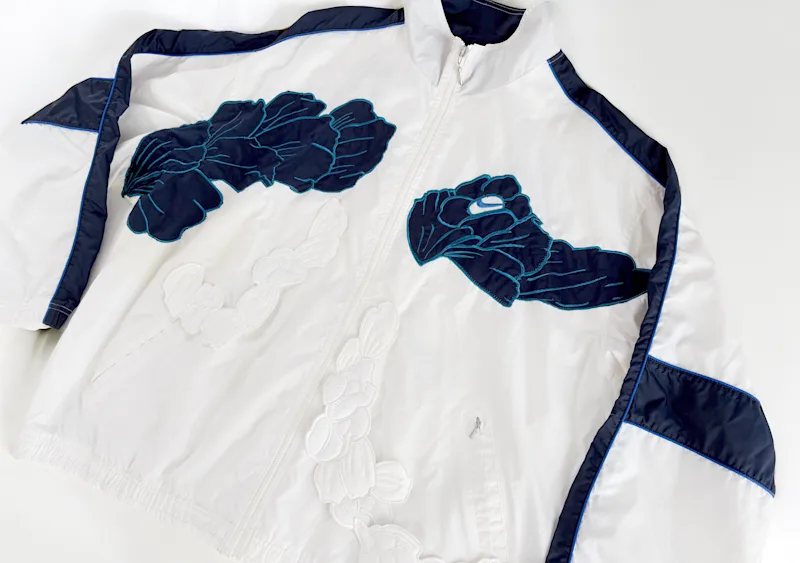
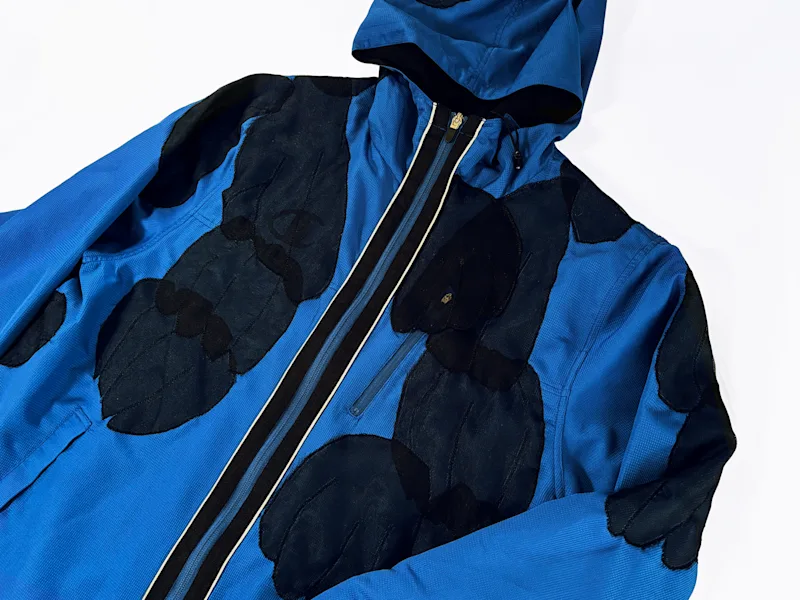
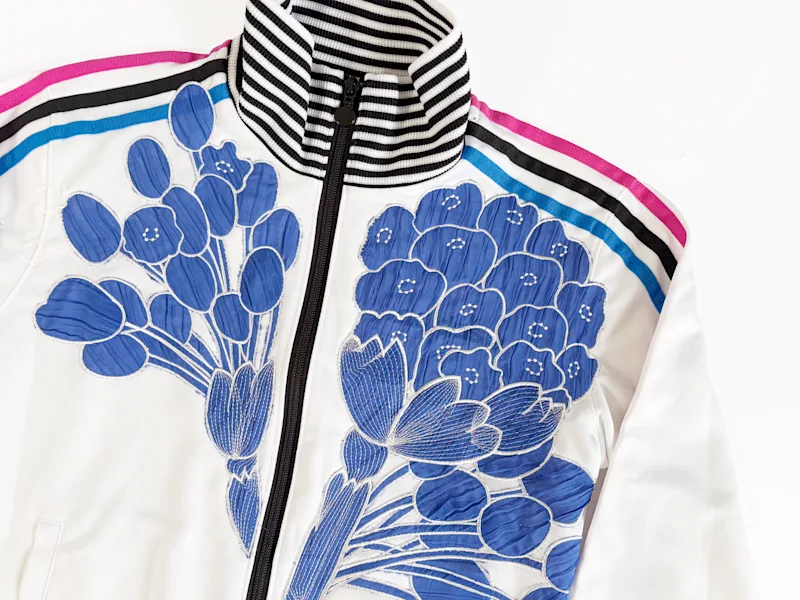
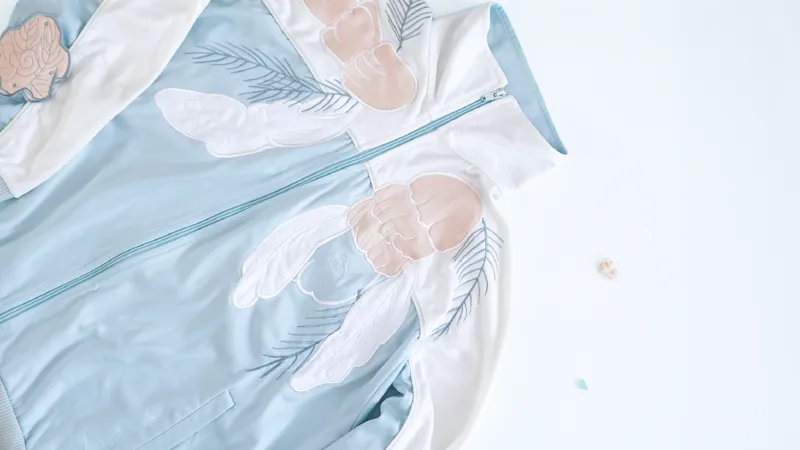
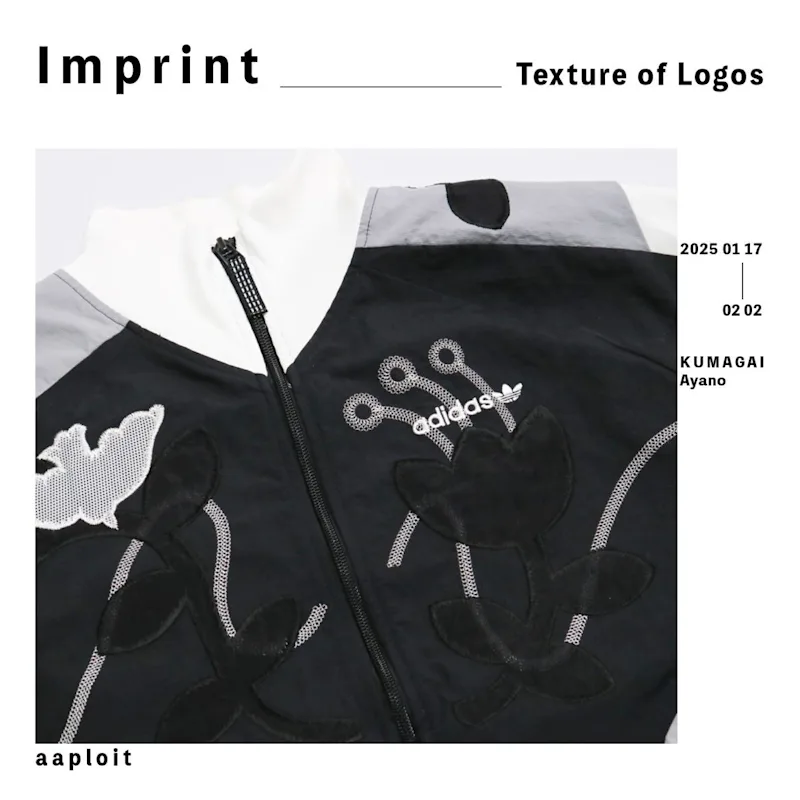
Without erasing the brand logos on secondhand garments, I layer fictional plant motifs over them—forms that fulfill every condition of plant-life while remaining unidentifiable as any existing species, applied at the pace of an industrial embroidery machine. The time of the machine and the time of plants move in opposite directions. That contradiction remains unresolved, fixed onto a single garment.

Artist Statement

An industrial embroidery machine advances at an industrial pace. Which plant motif to summon, where on the garment to place it, at what scale, in which colors of thread—compositional decisions accumulate, one garment at a time.

The material I choose is secondhand clothing—garments that have already passed through another context, through someone's body, accumulating marks on their surface. Rather than erasing what is already there, I layer over it. What I summon is a fictional plant motif: bearing stems, petals, a tendency to cluster—fulfilling every condition of plant-life while remaining unidentifiable as any existing species. To depict a known species would be to let that plant's cultural memory enter the work. What I need is only the temporal texture of plant-ness, stripped of meaning—the rhythm of growth, circulation, and slow overwriting.

The pace of the machine and the time of plants move in opposite directions. That contradiction remains unresolved, fixed onto a single garment. On this garment, at least three tenses exist simultaneously: the past accumulated in the secondhand clothing, the present of the marks already there, and a time not yet arrived, indicated by plant motifs that have no name. They carry no resolution—remaining unsolved, continuing to overlap.
Biography

Can unnamed life take root on the surface of desire's signs? Kumagai Ayano pursues this question through cloth. She selects secondhand garments bearing brand logos and layers fictional plants over them by industrial embroidery machine—forms that fulfill every structural condition of plant-life while remaining unidentifiable as any existing species. The logos are not erased; they remain beneath the petals, as if still breathing. Having worked within apparel production and distribution, Kumagai chose the industrial machine—a tool that advances at industrial pace—as the very means by which to introduce the time of plants. She holds a BFA in Textile Design and an MFA from Tokyo Zokei University (2016).

CV

EDUCATION

2014

BA in Textile Design, Tokyo Zokei University, Tokyo

2016

MA in Design, Tokyo Zokei University, Tokyo

SOLO EXHIBITIONS

2025

Imprint – Texture of Logos, aaploit, Tokyo 2022 altitude, aaploit, Tokyo

GROUP EXHIBITIONS (SELECTED)

2023

The Figure 8 Dance, Koganecho Artist-in-Residence, Kanagawa

Tokyo Zokei University 9th Teaching Assistant Exhibition, Tokyo

2022

Tokyo Zokei University 8th Teaching Assistant Exhibition, Tokyo

SICF23, Spiral, Tokyo

Hand-held Art Charity / Eco Bag Art Exhibition, Okayama

2017

Cheongju International Craft Biennale, Cheongju, South Korea

2016

The Dorothy Waxman Textile Design Prize, New York, USA

The 2nd Young Textile Art Triennial - YTAT 2016, Poland

2015

Japan Craft in IWATA, Public Glassmaking and Metalworking Facility, Iwata

bi chu watabokkee - From Wood to Yarn, Okayama

RESIDENCIES & FELLOWSHIPS

2015

Bitchu Art Bridge (Okayama Prefecture), Okayama

WORKSHOPS

2022

Sakiami Workshop, aaploit, Tokyo

2017

Sakiami Workshop, mee mee center sumeba, Shimosuwa

AWARDS & GRANTS

2018

57th Japan Craft Exhibition, Reiko Sudo Prize

2016

Tokyo Zokei University, ZOKEI Award

2015

54th Japan Craft Exhibition, The Yomiuri Shimbun Prize