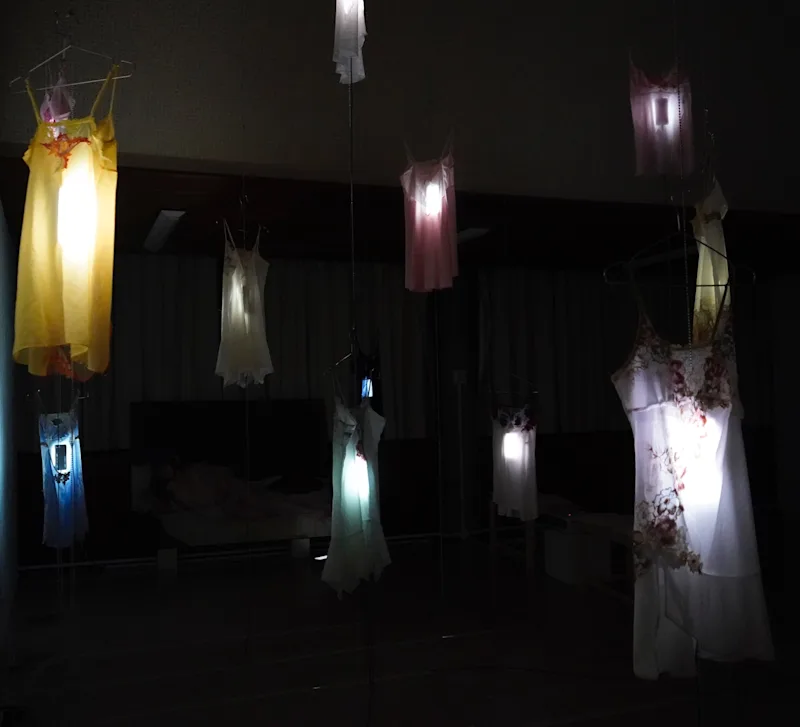
The graduate exhibition at Aichi University of the Arts occupies a secluded former music department building. Asano Miyabi's Thank You, December 31st was installed within this space.
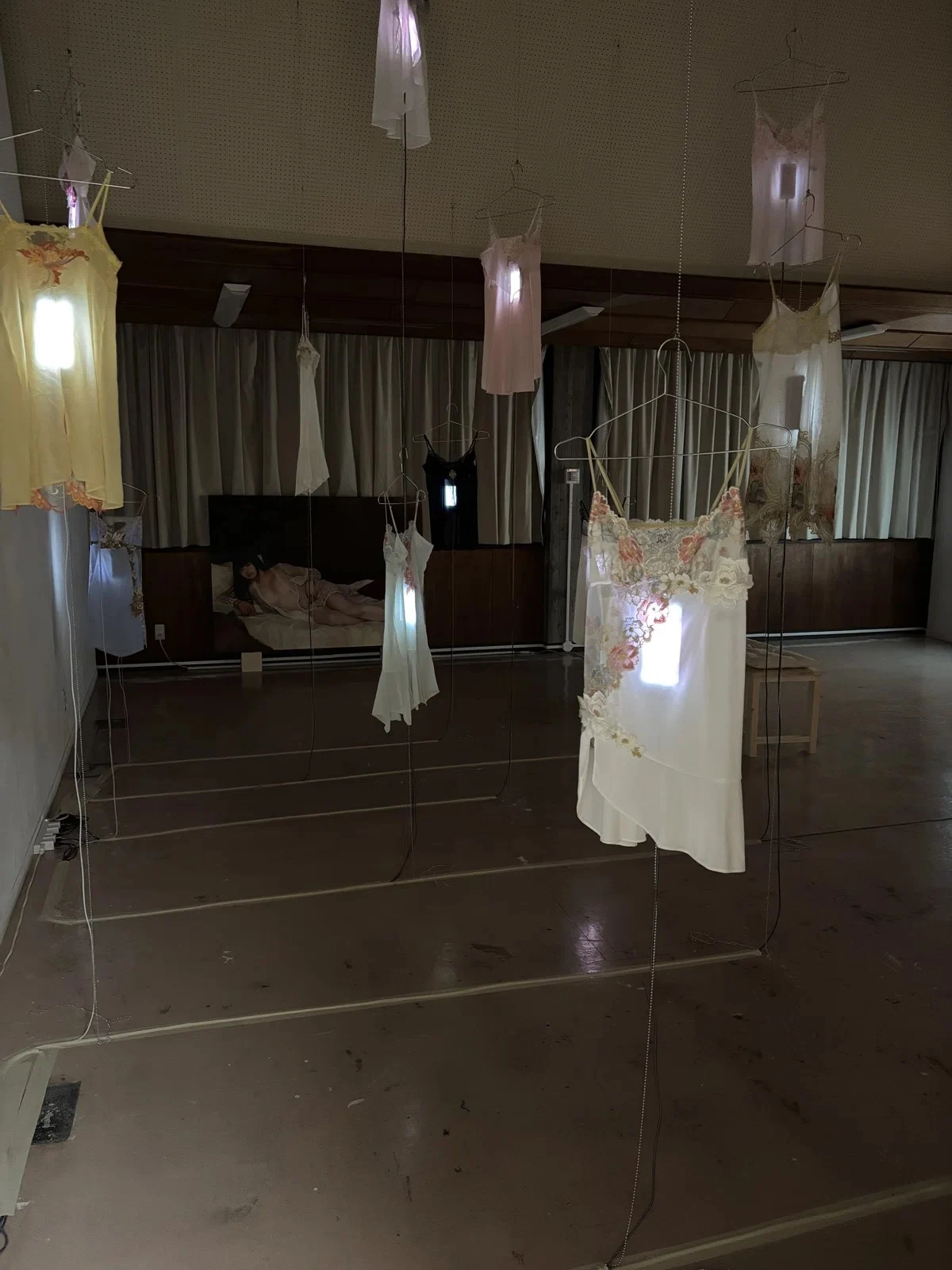
Multiple camisoles hang suspended from the ceiling. A faint light emanates from within each one. Drawn closer, the viewer discovers the source: smartphone screens. Text messages are visible inside the camisoles, but the screens switch before they can be fully read. The camisoles were provided by sex workers; the messages displayed are thank-you emails to clients and accompanying client notes.
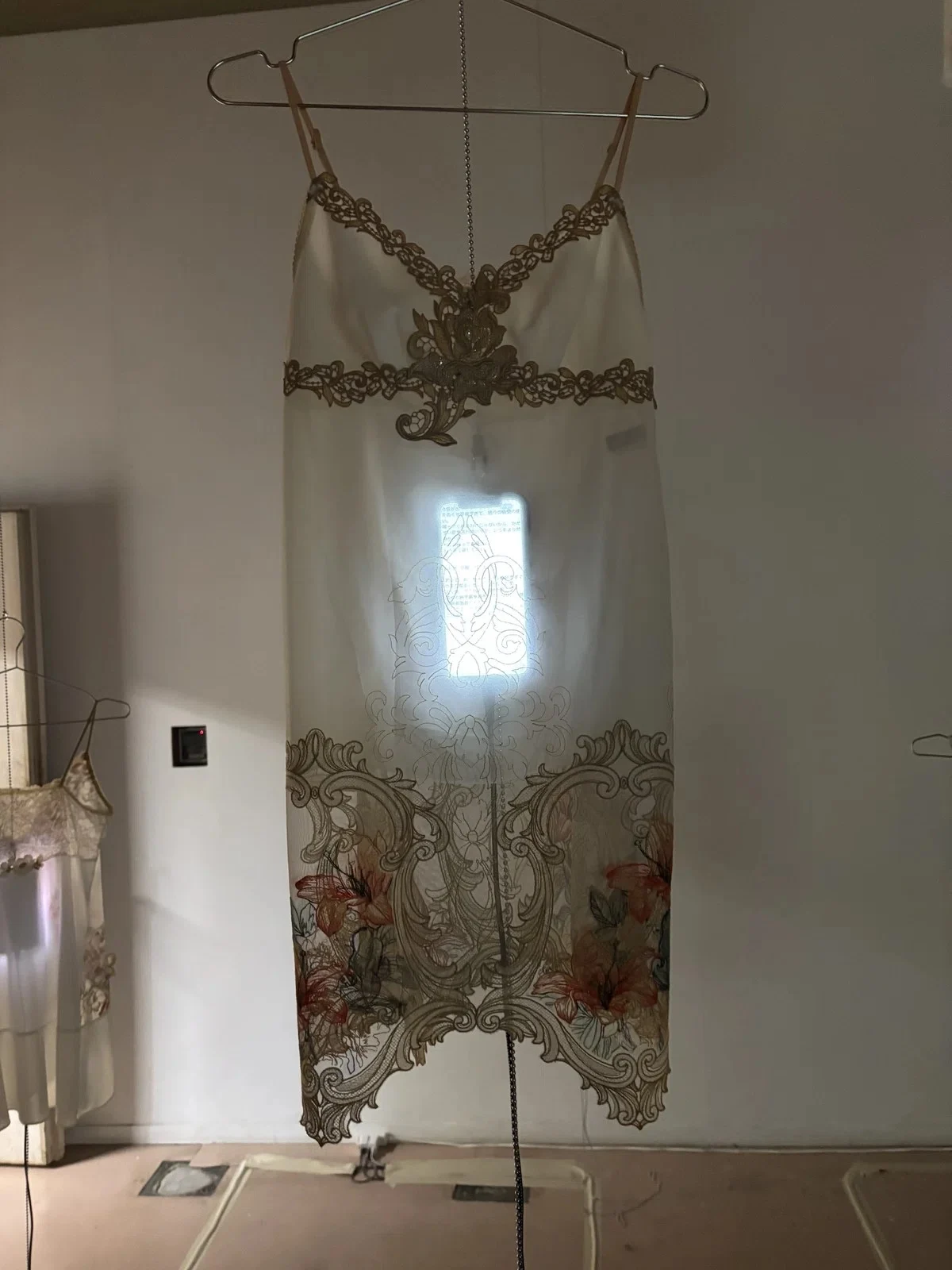
The work presents extremely private material through a double veil. The undergarment fabric is the first layer—physical, intimate, worn. The smartphone screen is the second—digital, flickering, withholding. Through this dual concealment, the viewer's gaze is controlled without being refused. One is invited to look, then prevented from fully reading.
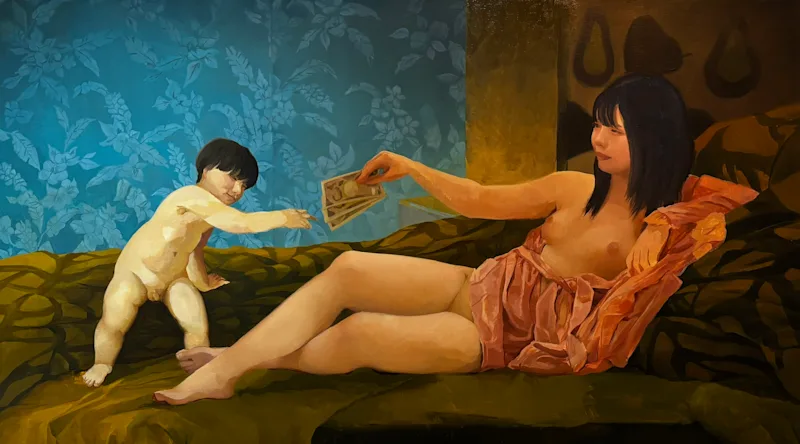
At the far end of the space, a painting is positioned in near-darkness: a semi-nude woman reclining. The composition directly references Titian's Venus of Urbino. The model is a contemporary sex worker. The juxtaposition is not incidental. Many of the women who posed for canonical nude paintings in Western art history were sex workers. The mythological rhetoric of the Renaissance rendered this invisible. Asano makes it visible again.
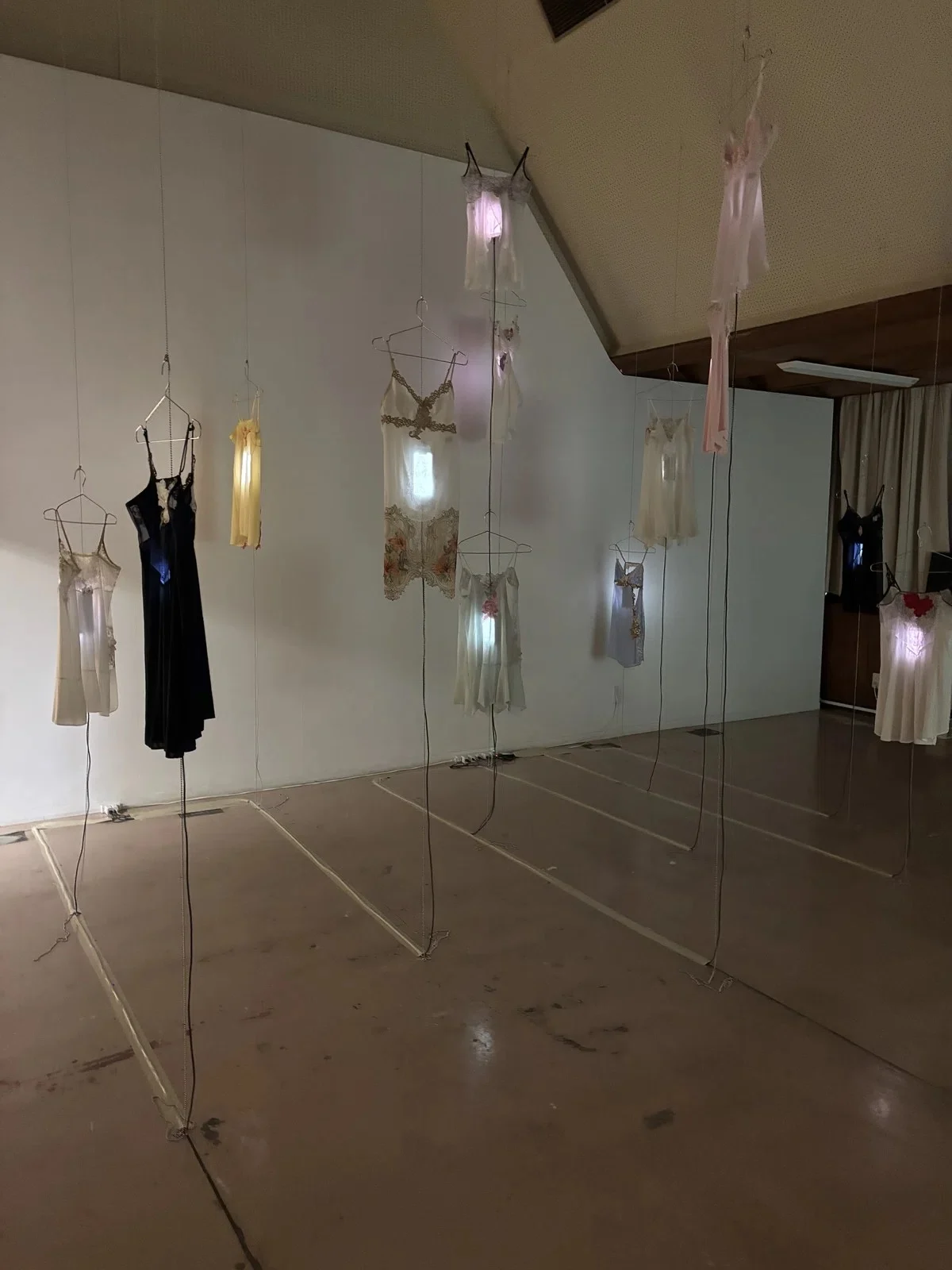
The title names a specific moment: December 31st, year-end, a night when sex workers and their clients are both present in the city. The camisoles standing together in one space make that presence literal—each one distinct in color and decoration, each carrying the trace of an individual, each part of a reality the viewer has almost certainly chosen not to examine directly.