Ho Tzu Nyen's work does not ask whether the Kyoto School philosophers were guilty. It asks whether the viewer is any different.
Voice of Void (first exhibited at YCAM in 2021) takes as its subject the Kyoto School philosophers of wartime Japan—intellectuals who produced sophisticated philosophical justifications for a war they could not see from the inside. But the work's concern is structural rather than historical. It uses the body of the viewer, placed inside a VR headset, to make a proposition: that the distance between knowing and understanding is not a historical problem. It is a contemporary one.
The Weight of the Headset
The VR headset restricts vision and adds physical weight. Viewers can stand, sit, lie down, or remain still—each posture shifts the image. But the body itself remains invisible within the experience. Perception is active; physical presence feels reduced. Information flows continuously while the sense of embodiment recedes.
This is the work's central device. The Kyoto School philosophers debated life, death, and sacrifice in the abstract language of "absolute nothingness"—zettai mu—while remaining physically remote from battlefields and executions. Nishida Kitarō's philosophy, refracted through wartime interpretation, became what the title names: a voice of void, lofty rhetoric that sent young people to their deaths while generating no friction against its own premises.
The VR headset reproduces this structure in the viewer's body. Not as metaphor, but as physical fact. The weight presses on the head. The visual field narrows. Knowledge arrives without resistance. The gap between virtual experience and bodily reality—between perception and presence—is the same gap that allowed abstract thought to remain untethered from consequence.
Three Layers, One Position
The work constructs a vertical three-layer space. Above: mobile suits flying through the sky, the realm of ideals, linked to Tanabe Hajime's philosophy of life and death. Below: the prison where Miki Kiyoshi and Tosaka Jun died. Between: a ryōtei where scholars hold roundtable discussions, and a Zen meditation space.
The Kyoto School philosophers occupied this middle position not by choice but by structure. They philosophically justified the war under pressure from the military while simultaneously being surveilled and suppressed by the Special Higher Police as ideological dangers. Cooperation and suspicion, deference and persecution—simultaneously. This "suspended" condition is experienced by the viewer as literal vertical movement through the three layers.
Stay still, and the work pulls toward meditation—detached, floating. Move slightly, and the scene cuts. The continuity was illusory. This instability—the discovery that one's position was never secure—is what the work produces as bodily knowledge rather than historical information.
The contemporary parallel is not forced. We cooperate with systems while being monitored by them. We act with good intentions while caught in structural complicity. The suspended position of intellectuals eighty years ago maps onto conditions that are recognizable today.
The Forced Witness
An important reference point for the work is Ōya Masuzō's Sand of Asia—a journalist's account of the battlefield position: required to record, prohibited from protest. Viewers of Voice of Void are placed in an equivalent role, positioned as stenographers of the roundtable discussion. They can witness and record. They cannot speak.
This is the structure of contemporary information consumption made visible. We record and distribute events daily. We lack the power to produce structural change. We can leave the experience at any moment, yet once something is known, ethical escape becomes difficult. The freedom to leave and the weight of staying—this is the question the work leaves open.
"Southeast Asia" as Ideological Construct
Ho Tzu Nyen's origins in the Malay Peninsula give the work a decisive perspective unavailable to the scholars it examines. When the Kyoto School philosophers discussed the Greater East Asia Co-Prosperity Sphere, they produced no viewpoint toward the Asian countries implicated in that framework. The critique carries the weight of someone directly affected by this absence.
Ho Tzu Nyen himself has pointed out that the very term "Southeast Asia" is a Japanese wartime construction—a directional expression created from a Japan-centered perspective for regions where no unified political identity had previously existed. The concept embodies the ideological framework it ostensibly described. The Kyoto School's most foundational geographic category was already ideology.
The Zaku and the Zero
War in Voice of Void is represented through animation—specifically through mobile suits appropriated from the visual language of Gundam's Zaku. This is not decorative. The Zaku's design inherits the aesthetic of the Zero fighter. Postwar Japanese anime has processed and transformed the memory of war into a visual language of cool, mobile, heroic combat—a language that circulates across Asia and beyond, received and enjoyed in the very countries that Japanese imperialism once occupied.
Ho Tzu Nyen presents this as fact rather than condemnation. Japanese popular culture has functioned as cultural transmission across borders that were once military frontlines. The Zaku carries this history without announcing it. The work asks viewers to recognize what they are already inside.
If animation is understood in relation to its root in animism—the giving of life to matter, the summoning of presence—then this use of animation carries a further meaning: the voices of the dead, reanimated through the cultural forms that their deaths helped produce.
The Work That Required Others
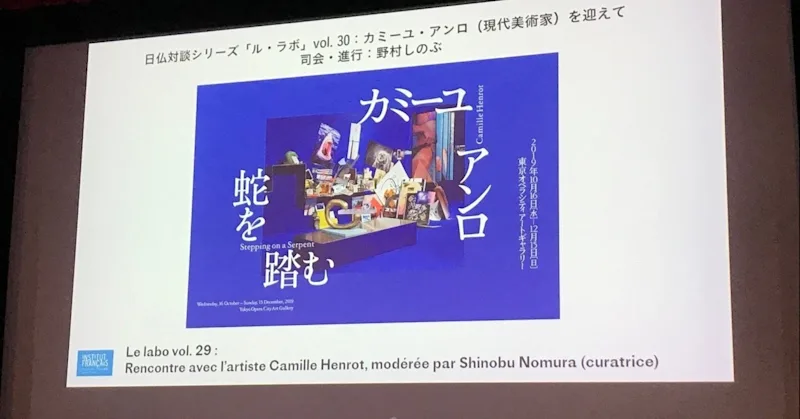
Voice of Void could not have been made by Ho Tzu Nyen alone, and the work does not pretend otherwise. Nose Yōko handled the collection and translation of the vast historical materials that underpin the work's documentary density. YCAM provided technical supervision and system development. Speed Inc. produced the CG animation. An earlier work, Ryokan Aporia (presented at the 2019 Aichi Triennale), made this collaborative process explicit—the email in which the curator sent interview materials from the proprietress of Kirakutei to Ho Tzu Nyen was presented as part of the work itself.
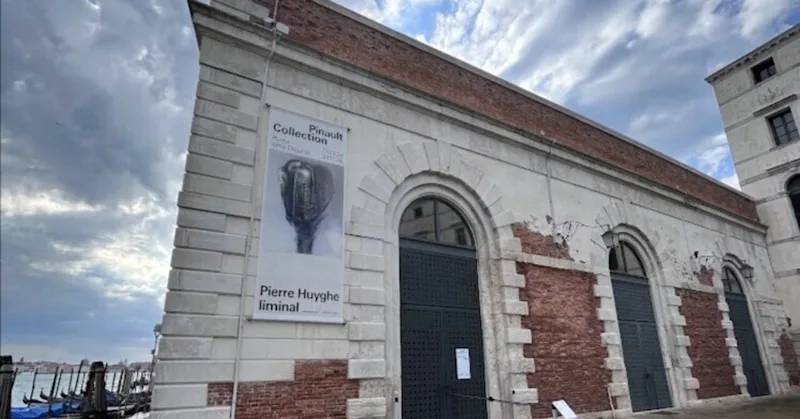
This transparency about production is not incidental. The question the work raises—about the complicity of those who record and transmit without the power to change—is answered, at least partially, by the work's own structure. The artist's role is the generation of the question. The materials, the technical systems, the physical space: these are contributed by others who bring knowledge the artist does not possess. Pierre Huyghe employs multiple researchers for the same reason. The division of labor is not a practical concession but an acknowledgment of what knowledge requires.
In the 2022 winter restaging of Ryokan Aporia, viewers sat on cushions in a Meiji-period wooden building in freezing cold, watching footage from the low camera angle that Ozu Yasujirō made iconic. The building's history—from sericulture to military use to postwar automotive industry—layered beneath the experience without being announced. The body knew the cold before the mind processed the history. This is what VR, precisely, cannot do. The two modes of experience define each other by contrast.
The Question That Remains
Voice of Void does not offer historical verdict. It constructs a situation in which viewers are asked to locate themselves within the same cognitive structure they are observing. Before criticizing the Kyoto School philosophers for the gap between their abstract language and the reality of death, viewers must account for their own position: receiving information through screens, accumulating knowledge without friction, watching from a distance that feels like safety.
Eighty years apart, the structure persists. That persistence is the work's proposition—and its refusal to resolve.