In 2020 I published a text about AnnLee (in Japanese) —the minor manga character purchased by Pierre Huyghe and Philippe Parreno from a Japanese animation company in 1999, for 46,000 yen. The character had an ID number, a name, and almost nothing else. No history, no interiority, no ghost. In 2026, that text is being read again.
I work daily with AI as a business growth domain—governance, implementation, competitive positioning. I also direct aaploit, a Tokyo gallery, and spent several years researching Huyghe's practice for my MFA. The question AnnLee was always asking has arrived, loudly, in both rooms simultaneously.
Ghost in the Shell appeared in 1995. Four years later, Huyghe and Parreno purchased AnnLee. The question moved slowly after that—from animation, to art, to infrastructure. By the time institutions recognized it, generative AI had already made the issue operational.
AnnLee was designed for a single production—a disposable minor character whose commercial function ended the moment the production was released. Huyghe and Parreno did not rescue her. They retrieved her knowingly. Retrieval implies recognition: someone knows something is being taken, and takes it with intent. The copyright was purchased. The digital data was purchased. What the purchase made visible was something the animation industry could only function by leaving invisible: that a character is property, with an ontological status as unstable as its legal one.
AnnLee came from the industry I grew up alongside. The transaction—French artists purchasing a discarded Japanese character from an Akihabara company—carries a dimension that Western criticism rarely pauses on. What was extracted was not only a figure. It was a structural logic embedded in Japanese visual culture: the bishōjo as empty form, a vessel awaiting projection. That this property was recognized from the outside, lifted out, and placed inside the Western contemporary art system is itself worth sitting with.
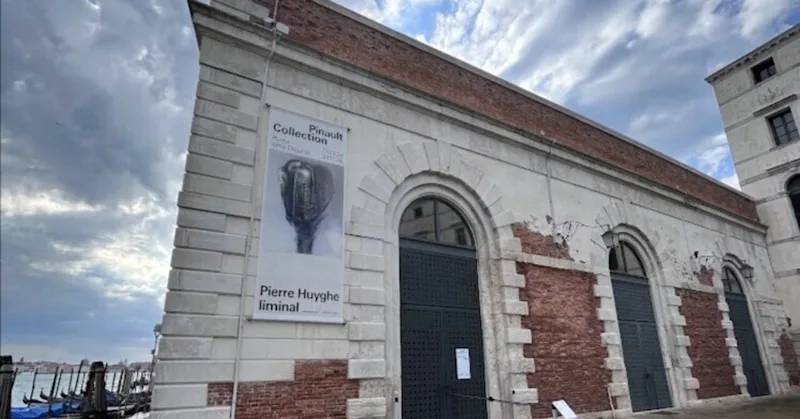
The project culminated in a declared burial. AnnLee's copyright would be retired; the figure would not be used again. This declaration was made formally, at the close of the SFMOMA exhibition in 2002. Then, in 2019, Huyghe presented her again at Okayama Art Summit—alongside a performance work by Tino Sehgal. I was present. No explanation was offered for her return.
Whether this constitutes contradiction or continuation is a question I raise without verdict. I am also inside this world. But the absence of explanation is something the art world routinely accommodates in ways other fields do not. The grand gesture is recorded; its revision passes without remark.
Huyghe had been working this territory before AnnLee. In 1997 he made Blanche Neige Lucie—a work about Lucie Dolène, the French voice actress who dubbed Snow White and spent decades denied royalties for a performance that had circulated continuously through the Disney machine. Her voice was everywhere; her right to that voice was nowhere. Huyghe retrieved this too: not a character, but a person rendered functionally invisible by the same logic. Cultural production operates by making certain things legible—the image, the product, the brand—while making others unreadable: the labor, the origin, the claim.
Copyright protects expression, not style. This was designed for a world in which human artists influence one another—absorbing, transforming, building on what they have encountered. The law assumes that learning and extraction are separable. Generative AI has made this assumption difficult to maintain. Style—unprotectable by design—is precisely what these systems extract at scale from works that are individually protected. The question is not whether a gap exists. The question is whether that gap was always waiting for sufficient scale to become something else.
Whose style is it when a model trained on a thousand artists produces work that resembles none of them specifically and all of them in aggregate? This question was not invented by AI. AnnLee posed it in a different register in 1999. Lucie Dolène's voice posed it before that.
Huyghe and Parreno were not predicting AI. What they were doing was attending to something the cultural industries had long managed by not looking at it directly: that extraction, within systems of production and circulation, is systematically rendered invisible. Their prescience was not technological. It was a sensitivity to what the machinery of culture obscures—and a willingness to name it, briefly, as art.
The question has since moved into courtrooms, policy documents, earnings calls. What has changed is not the structure but the scale—and something harder to name. Huyghe retrieved knowingly. The declaration was the gesture. Now the extraction no longer requires recognition. The system moves. The declaration disappears first.