Osa Seiichiro constructs the picture plane through color fields composed of quadrilateral forms. The logic behind this practice, as Osa describes it, centers on a concept he calls ken (圏)—a word indicating territory or sphere, heard in Japanese compounds such as shutoken (metropolitan area) or ken-gai (outside the sphere). For Osa, ken is not a formal strategy but an ontological proposition: a way of asking how existence generates and unfolds.
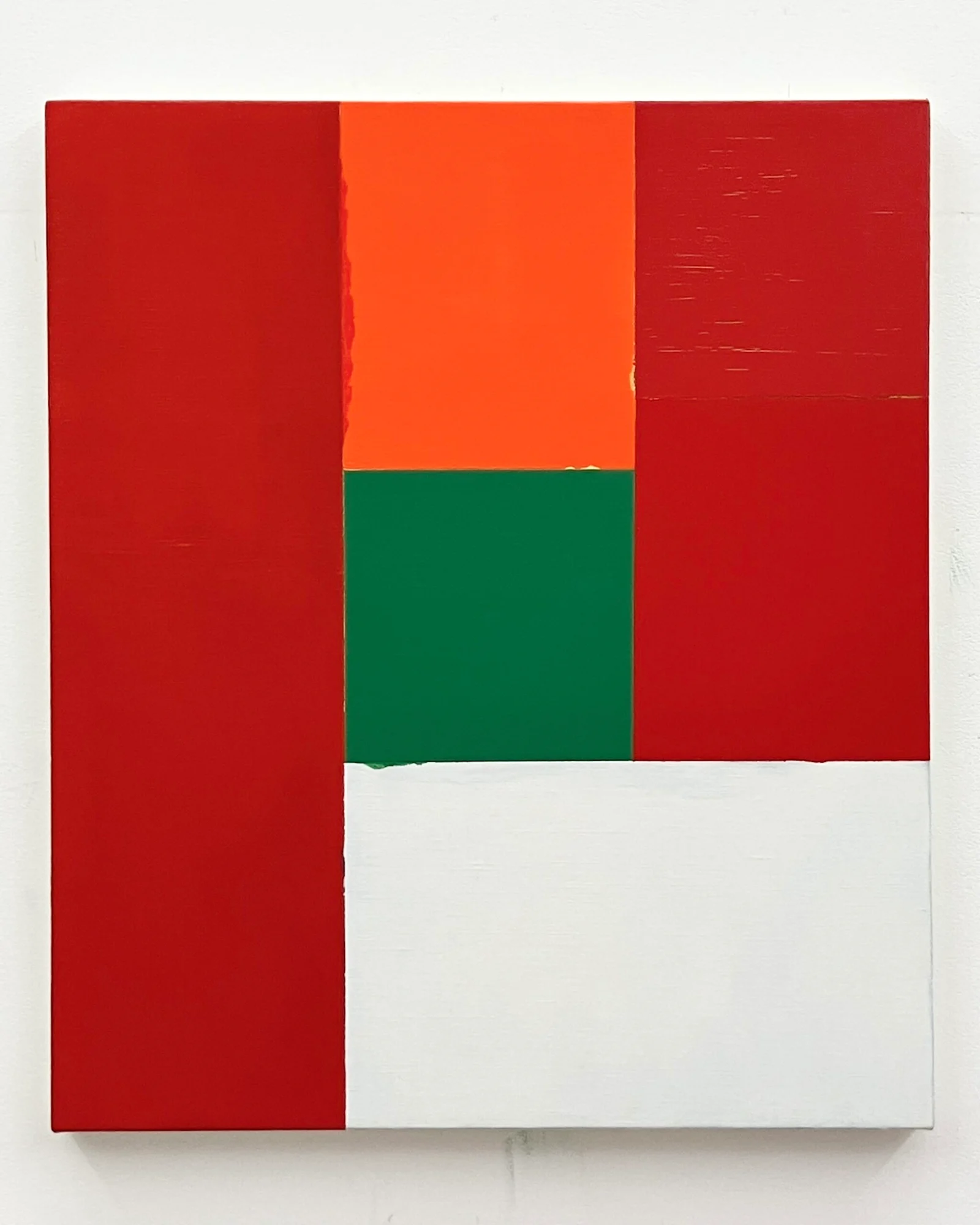
The geological analogy is his own. Just as the earth accumulates through stratified layers over time, Osa builds the picture plane through successive applications of paint. Each layer is temporally distinct. The surface that results is not a depiction of depth but a record of duration—paint as sedimented time.
Osa also composes haiku, and his account of the relationship between the two practices is precise: haiku and painting, he says, exist in different dimensions. Haiku crystallizes a single moment, yet within that moment, past and future converge. The compression is temporal, not merely linguistic. Painting, by contrast, expands time through accumulation—layer upon layer, each decision made in sequence, each mark carrying the weight of what preceded it. The two practices share an interest in how time inhabits form, but through opposite operations: one condenses, the other deposits.
What this generates in the viewer is a dual consciousness. The picture plane is first encountered as material—quadrilateral fields of color, the texture of paint, the pressure of boundaries between forms. Then, gradually, something shifts: the surface declares itself as painting. This movement from material recognition to self-aware encounter is not illustrative of Osa's concept. It is the concept enacted.
The quadrilateral form might appear abstract, but abstraction is not the point. Geological strata are neither abstract nor figurative—they are structural. Osa's color fields occupy a similar position: beyond existing categories, neither representing the world nor departing from it, but proposing a different account of how the world is built.