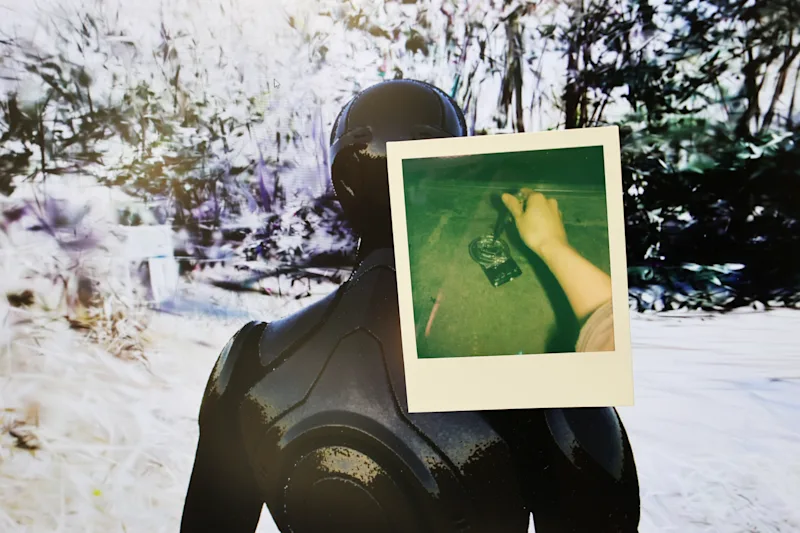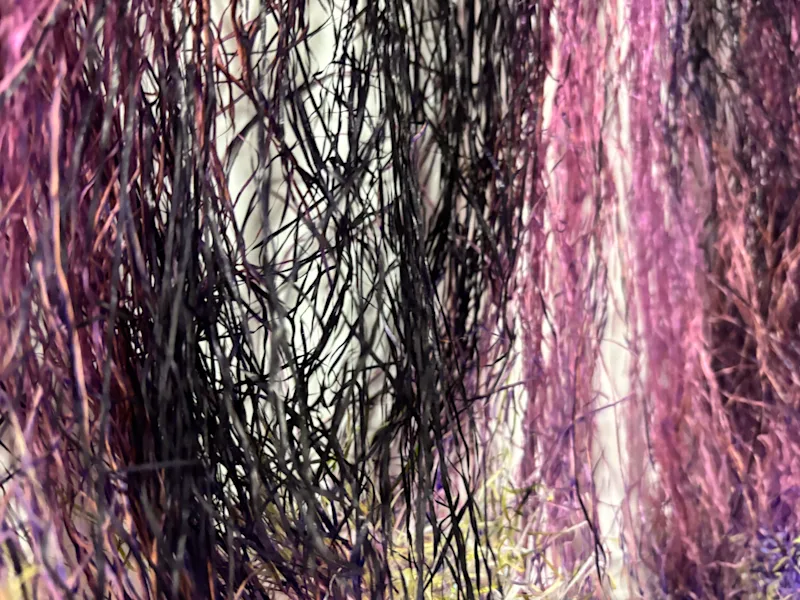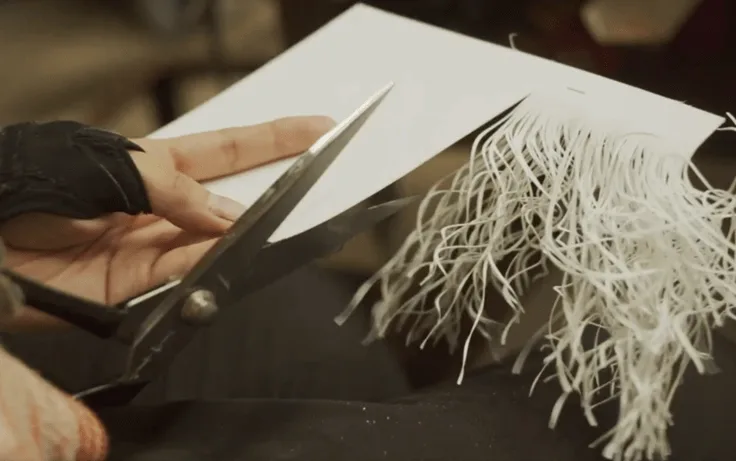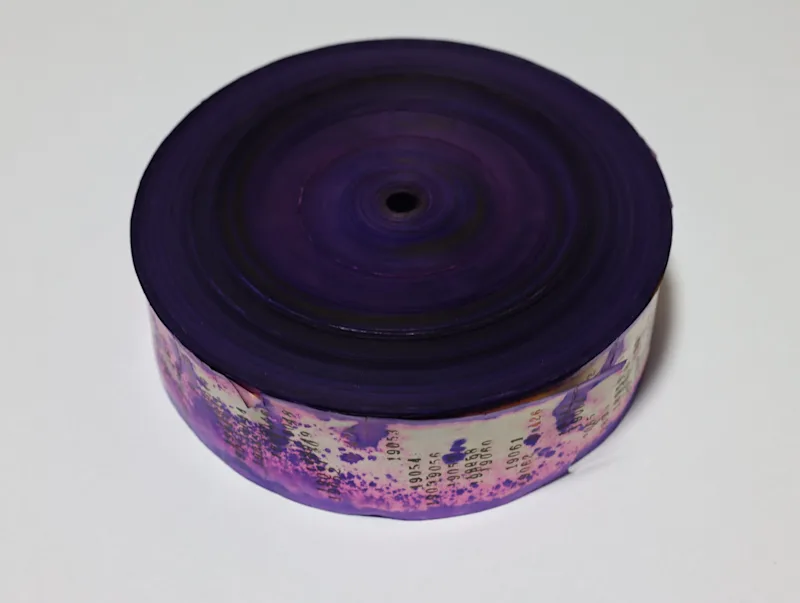
Uematsu Mizuki cuts paper, dyes it, presses stamps into its surface. She strikes iron, folds it, layers it. The same actions, repeated across an expanse of time.
Action accumulates in material. Material is transformed by action. This exchange is not a process in which the artist's intention governs the medium—it is one in which repetition itself generates a relationship between the two that could not have been decided in advance. Something unreachable through a single contact begins to emerge, gradually, within the accumulation of return.
In Uematsu's practice, repetition is not the doing of the same thing. To cut is to cut upon the trace of the previous cut. To dye is to lay color over what has already received it. To press is to inherit the minute deformation left by the pressure before. Each action accumulates; each accumulation alters the conditions of the next. The same gesture is never the same gesture twice.
Within this structure, what Uematsu pursues is neither efficiency of making nor the completion of expression. It is the perceptual circuit that opens only through sustained contact with the world—contact maintained across an almost unreasonable duration. The work exists as the trace of that circuit having passed through.